

Alternative platform to flow chemistry
Prof. Martina Letizia Contente's research group at Università degli Studi di Milano faced a critical bottleneck in their biocatalysis work. They needed to process highly viscous substrates and products, involving microbial lipids and fatty acids, while contacting the substrates with immobilized enzymes (CalB).
The research team faced significant challenges:
Batch mode: Mechanical stirring can damage immobilized enzyme beads, and mixing is inefficient in viscous media.Continuous processing: The high viscosity of the fatty acid mixtures led to tube blockage, preventing reliable operation of the system for this application.
"We tried to go to flow chemistry. And basically everything was blocked, stuck into the tubes. And at that point, we said, okay, we need to change something in our reactor shape."
— Prof. Martina Letizia Contente
Beyond simply completing reactions, the research team needed a system that would reduce reaction time and solvent waste, improve energy efficiency, handle multiple substrates at different concentrations simultaneously, and enable efficient catalyst recovery and reuse. These were essential requirements for advancing their research in sustainable chemistry.
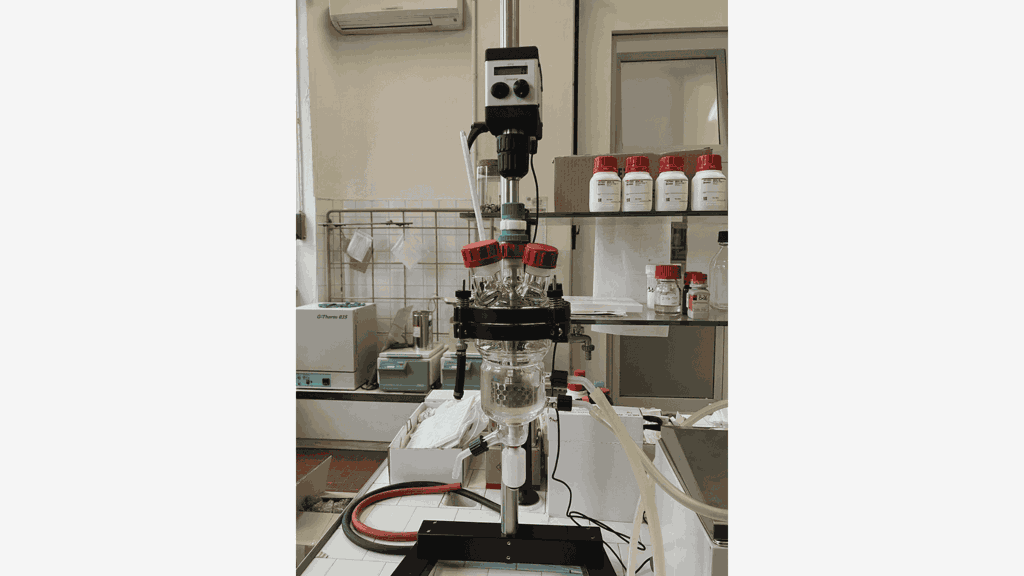
How Rotating Bed Reactor technology solved viscosity challenges and catalyst damage
Prof. Contente chose to implement the RBR technology as a complementary solution to their flow chemistry setup.
The team found the RBR setup remarkably simple. The process involved just three steps: placing the immobilized enzyme beads in the RBR, closing it up, and adding the viscous reaction mixture to the glass vessel before starting the rotation.
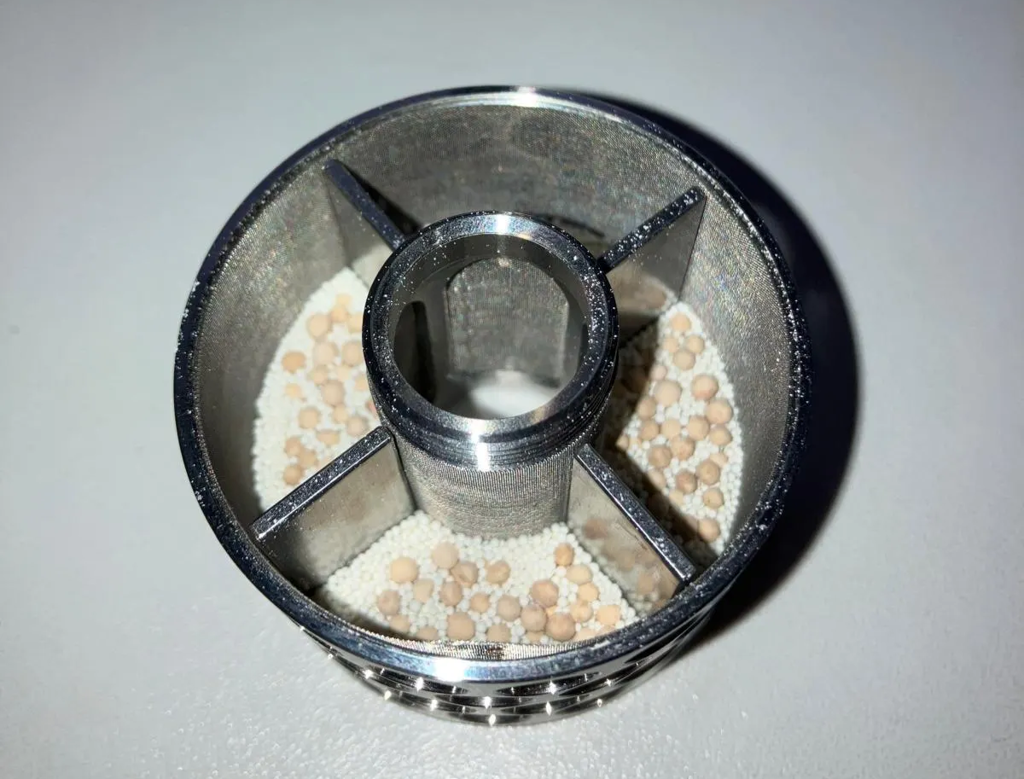
Immediate impact and ongoing value
"We were able to reach complete conversion of our reaction in a few hours, and we decided to explore more."
— Prof. Martina Letizia Contente
Key benefits of SpinChem® rotating bed reactor:
- Complete conversion achieved in just a few hours
- Zero catalyst degradation leading to maintained bead integrity through multiple cycles
- Complex reaction success handling four different substrates at varying concentrations
- Simple setup with straightforward implementation
Conclusion
The implementation of SpinChem® rotating bed reactor technology at the University of Milan demonstrates how the right reactor configuration can transform challenging biocatalysis work. By providing effective mass transfer in viscous liquids while protecting catalyst integrity, the RBR enables researchers to achieve results that conventional approaches could not deliver
--
Case study is based on an interview conducted with Prof. Martina Letizia Contente, Department of Food, Environmental and Nutritional Sciences (DeFENS), Università degli Studi di Milano.
Related publications
Prof. Contente's research group has published multiple peer-reviewed papers using SpinChem RBR technology, demonstrating their expertise in biocatalytic process intensification:
- "Spinning Green: Lipase-Catalyzed Synthesis of Bioactive Fatty Acid Amides..." (ACS Sustainable Chemistry & Engineering, 2025), featuring the impressive 5-fold time reduction and enzyme reusability results
- "Boosting the catalytic performance of a marine yeast..." (Reaction Chemistry & Engineering, 2023), demonstrating >90% conversion with immobilized whole cell biocatalysts
Facing similar challenges?
If your team is working with:
- Viscous substrates that challenge conventional reactors
- Immobilized biocatalysts requiring protection and reuse
- Multi-component reactions needing efficient mixing
- Scale-up from laboratory to pilot or production
- Green chemistry and sustainable process development
Contact our technical team to discuss your specific application and explore how RBR technology can accelerate your research and development.