

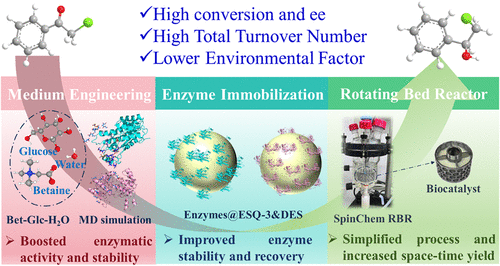
Enzymatic reduction of halogenated aryl ketones (HAKs) is an important reaction for the synthesis of pharmaceutical-related enantiopure halohydrins, but its preparative application remains restricted due to low substrate solubility and poor mass transfer in aqueous media. Herein, a multiengineering approach involving medium optimization, enzyme immobilization, and a rotating bed reactor was applied for intensifying the enzymatic reduction of HAKs. A deep eutectic solvent (DES) composed of betaine, glucose, and water (Bet-Glc-H₂O) was demonstrated to be effective in improving enzymatic activity and stability, enabling efficient reduction of high-concentration HAKs (1.0 M, 85% conversion). In addition, enzyme immobilization was conducted using DES-modified resin supports, markedly enhancing the operational stability and reusability of the biocatalysts. Finally, a SpinChem rotating bed reactor (RBR) was implemented for further intensifying the enzymatic process, leading to dramatically shorter reaction times and increased overall productivity.
Keywords
ketoreductases, chiral halohydrins, deep eutectic solvents, bioprocess development, biocatalysis, enzyme immobilization
Highlights:
- Deep eutectic solvent boosts enzymatic performance: A DES system (Bet-Glc-H₂O) improved both enzymatic activity and stability, enabling efficient reduction of high-concentration halogenated aryl ketones at 1.0 M substrate loading with 85% conversion
- DES-modified resin supports enhance reusability: Enzyme immobilization on DES-modified resin carriers markedly improved operational stability and biocatalyst reusability for repeated reaction cycles
- SpinChem RBR dramatically accelerates the process: Implementation of a SpinChem rotating bed reactor further intensified the enzymatic process, leading to dramatically shorter reaction times and increased overall productivity